In this blog, I will share some ideas, tutorials, Interview questions and Answers for .net Programmers. There are a lots of articles and Interview questions which I am preparing and is not completed yet. So please view the blog continuously to get all the updates :) Search :
In this blog, I will share some ideas, tutorials, Interview questions and Answers for .net Programmers. There are a lots of articles and Interview questions which I am preparing and is not completed yet. So please view the blog continuously to get all the updates :) Search :
In this blog, I will share some ideas, tutorials, Interview questions and Answers for .net Programmers. There are a lots of articles and Interview questions which I am preparing and is not completed yet. So please view the blog continuously to get all the updates :) Search :
1.What is state management in ASP.Net State management means preserving the state of the page, controls, objects, user etc while we are moving from one page to another or a post back happens. 2. Why we need state management in Asp.net Data is transferred from server to the browser over HTTP. HTTP is a stateless protocol. Stateless means, state of the web page, controls are lost once we post the page from client to the server.It is important to save the state of the controls in a page after the page is post back.
For example I have one 1 text box for entering the "Employee Name" and one submit button for saving the "Employee Name". When click on the submit button, data is posted back to the server and data is processed at the server side. Since HTTP is stateless, it will not keep the value in the text box (Emplyee Name) after the postback. Here, for maintaining the value in the textbox after post back we need to use state management techniques.
3. What are the different types of state management in ASP.Net
There are 2 types of state management techniques
Server Side
Client Side
4. What are the different types of Client side state management in ASP.Net
View State
Hidden Field
Cookies
Control State
Query Strings
5. What are the different types of Server side state management in ASP.Net
Session
Application
6. From the list below, which is the control for which by default post back is enabled.
button
textbox
listbox
gridview
Ans - Button ( By Default button control have post back is enabled )
7. What are the Advantages and Disadvantages of using view state for state management
Advantages
View state is easy to implement. We can easily enable or disable view state at the page level or at the controller level
They are not using any server side resources. It is stored in the client side browser in a hidden field.
View state is secure because it stores the data in encrypted format.
It is good with HTTP data transfer
Disadvantages
View state information cannot transfer across pages automatically.
If the view state information is very large, it may cause the page load/ post back to be slow.
Mobile devices might not have the enough memory capacity to store a large view state data.
8. What are the Advantages and Disadvantages of using Hiddenfield for state management ?
Advantages
Hidden fields are standard HTML controls and it does not require any complex programming logic.
Almost all the browsers supports hidden field.
The hidden field can be stored and read from the page.
Disadvantages
Hidden field value is stored in the page itself and can directly view the content if we view the page source. This is potential security issue.
Hidden field value is stored in the page. Storing big values make the page load/ post back to be slow.
Hidden field stores value in the string format and it does not support rich data types. So we need to use custom logic ( like implement delimited strings) for storing multiple values
9.What are the Advantages and Disadvantages of using Session for state management ?
Advantages
Easy to implement
Accessing the data is fast since it is stored in memory
Complex data types can be stored in session without serialization
When we are using out proc mode, session data can be shared across servers and will not lose the data even the IIS or worker process restarts.
Disadvantages
Since it is stored in the memory, storing large data will impact the performance.
When we are using in proc mode, IIS restart or worker process restart will cause the data to be lost.
Web garden or Web farm cannot use the session state when using In proc mode
10.What are the Advantages and Disadvantages of using Query String for state management ?
Advantages
Easy to use
Supported by almost all the browsers
No extra effort is needed to code
Disadvantages
Since the query string values are appended at the end of url, it is easy to view by the users - Which is a security breach
Most of the browsers specify a maximum limit on the characters in the query string ( In IE, it is 2083 characters)
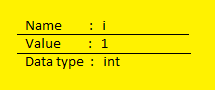
What is value type and reference type in C# .net with Sample code Introduction As a dot net developer, it is very much important to understand what is happening when we are declaring a variable. For creating an application which uses memory effectively and with better performance, we need to understand how memory is allocated while we are declaring a variable. When we are declaring a variable in C#, it allocates some memory in RAM for that variable. There are 3 parts for this memory 1. Name of the variable 2. Value of the variable and 3. Data type of the variable. That is it can be like below int x = 1;
A little deeper This is very basic understanding. If we go a little deeper, we can see there are 2 types of memory is available for storing the variable 1. Stack and 2. Heap So for now just understand - the variable you are declaring will be stored in any one of this memory, depending on the data type that you are declaring. We can skip stack and heap for now.
Now lets come to our point What is Value type Variables that are stored in the stack memory are called value types. Value types contain their actual data. With value types, each variable have its own copy of data. So operations on one variable does not affect the other variable.( you can understand this point after reading reference type also ). Consider the example below ( I suggest you to try this code yourself and get better understanding)
The out put of the above code is
This is one important point in value types. In line 2, I have assigned x to y and in line 3, I have updated the value of x to 5. But that is not affecting the value of y. This is because value type variables have their own copy of data. You can get better understanding while you complete reference type also. There is one more important thing for value types. After executing the method, the memory allocated for the value types are automatically get unallocated. That is immediately after the scope of the value type variables, memory will be cleared. They will not wait for the Garbage collector to run. All the built in data types of .net excluding string and object are value types. Also, among the user defined data types, struct and enum are value types. Example : int, long, float, double, decimal, byte, short, char, enum, struct etc.
What is reference type
Now lets come to reference types. Unlike value type, reference type does not store the data directly.Instead they contain pointers and pointers will point to the actual data. Reference types are stored in heap memory. This can be like below
So variable x contain the pointer to the memory location 100 and y points to 101. This is how reference types are storing the data. So, now it is possible that both x and y can point to same location say 100. Yes this is possible. See below.
Now what happens is, operations on one variable will affect the other variable, which is pointing to the same. That is, if x is going to change its value "Hello" to "Hello World", then what is going to happen here is it will change the value in the memory location 100 to "Hello World". After this operation if we check the value of y, we can see that value of y also got changed to "Hello World" because y is also pointing to the same location 100. Therefore, 2 variables can reference a single( same ) object and operations on one variable can affect the other. We can see this change with example.
The output of the above will be
We can see that both x and y have the same value even I have changed the value of x only. One other thing we need to remember in case of reference types is it will not reclaim the memory immediately after the variable goes out of the scope. We need to wait for the garbage collector to run for unallocating the caimed memory.
Examples : string, object, class, array, delegate, interface etc.
So we can conclude value types and reference types as
Value types contain the actual data while reference types will store reference to the data
Value types are stored in stack while reference types are stored in heap
Garbage collector is not required to unallocate the memory in the case of value type. But for reclaiming the reference types memory, we need wait for the Garbage collector to run.